
Dubois County Arrest Records and Charges
Dubois County arrest records and court charge records are connected, but they come from different parts of the system. An arrest record is tied to law enforcement and custody. It may involve the agency that made the arrest, booking at the Dubois County Security Center, and current custody information through the Sheriff's Office or roster channels. A court charge record is the formal criminal accusation filed after police submit a report and the Prosecuting Attorney decides whether to charge.
The Dubois County Prosecutor FAQ gives the key local distinction. The Prosecutor's Office does not investigate crimes. Reports go to the police agency with jurisdiction, such as Jasper Police Department, Huntingburg Police Department, Ferdinand Police Department, the Dubois County Sheriff's Office, or Indiana State Police. Police investigate and turn reports over to the Prosecutor's Office for review and possible charges. For the full court case, pleas, disposition, and sentence, use Dubois County criminal court records.
The official Dubois County Sheriff page is the local source for sheriff contact information tied to custody and arrest-related questions.
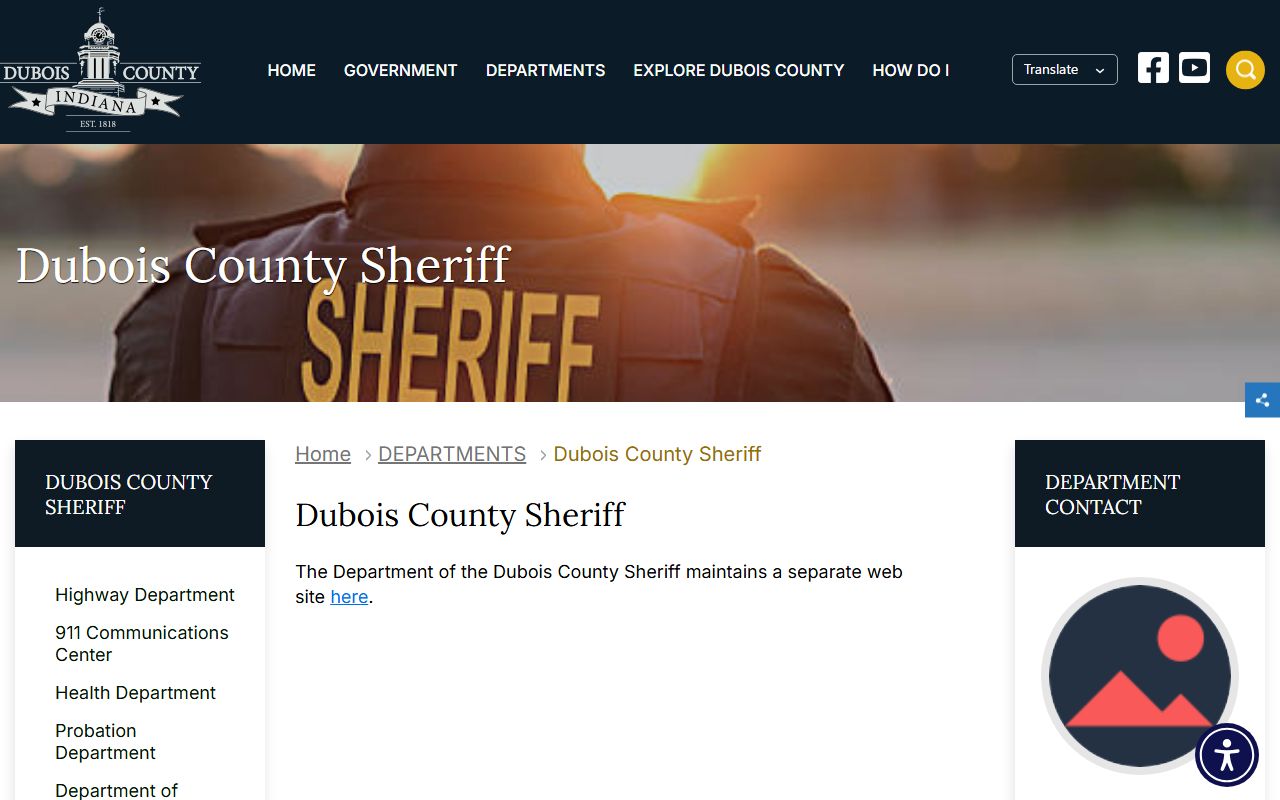
Sheriff information helps confirm the custody side, while MyCase and the Clerk show the filed court-charge side.
Search Dubois Arrest Records and Charges
Start with the record type. For a current custody check, the sheriff website links to a current inmate list that frames the JailTracker/Public Safety Cloud roster. The Sheriff's Office mobile app listings also advertise current inmate viewing, tip submission, crime reporting, and public-safety information. If the person is in state prison rather than county jail, the Indiana DOC offender locator is the better channel. Indiana SAVIN can help with custody notification.
For court charges after arrest, use Indiana MyCase. Search by defendant name, case number, citation number, or cross reference number. Public charge information may appear in the criminal case file, along with hearing entries, status, disposition, and sentence when public. If MyCase does not show the needed document, use the Clerk of the Courts for certified copies, older files, or a Public Record Request Form.
- Check the sheriff roster or Sheriff's Office app when the question is current custody or recent booking.
- Open MyCase when the question is whether court charges were filed after arrest.
- Search by defendant name or case number, then confirm the court, case type, and status.
- Read each charge line separately because one arrest can lead to several filed charges.
- Check the docket for amended, reduced, dismissed, diverted, convicted, or sentenced outcomes.
- Contact the Clerk for official copies or documents that are not downloadable online.
The sheriff police and accident report page documents local report-request and copy-fee channels for law-enforcement records.
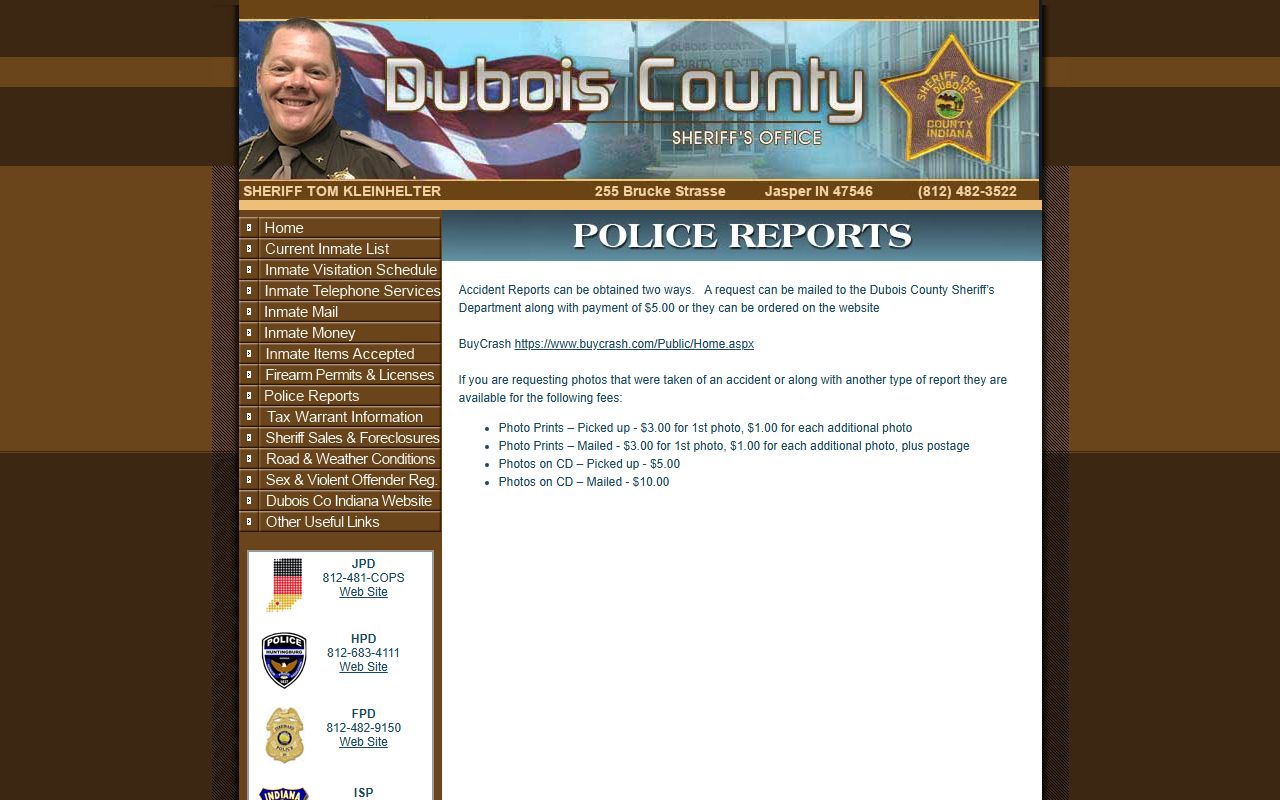
Police reports are separate from court charges, so a report request does not replace a court case search.
Charges Filed After Arrest
A court charge record starts when the formal accusation is filed in court. Indiana counties use a Prosecuting Attorney rather than a District Attorney, and the Dubois County Prosecuting Attorney represents the State of Indiana. The official page names Beth E. Schroeder as Prosecuting Attorney. The staff page states that the office includes five prosecuting attorneys, six administrative staff people, an investigator, and a victim advocate.
Charging documents can vary by case and procedure. The research confirms the local prosecutor-review path but does not provide a Dubois-specific form inventory for complaints, informations, or indictments. The table uses standard court-record distinctions while staying tied to the charge-record path: police investigate, prosecutor reviews, and the filed accusation becomes part of the court case.
| Complaint | Information | Indictment | |
|---|---|---|---|
| Filed By | Officer or prosecutor depending on procedure. | Prosecutor. | Grand jury process. |
| Record Role | States the accusation and starts or supports the case. | Formal prosecutor-filed charge document. | Formal grand-jury charge document. |
| Dubois Context | Follows police report and prosecutor review when charges are pursued. | Common charge-filing path after prosecutor review. | Use only when the court record shows that procedure. |
| Where to Check | MyCase docket and Clerk record. | MyCase docket and Clerk record. | MyCase docket and Clerk record. |
The Dubois County Community Corrections pretrial services page gives local context for court information, pretrial home detention, and pretrial work release after charges are filed.
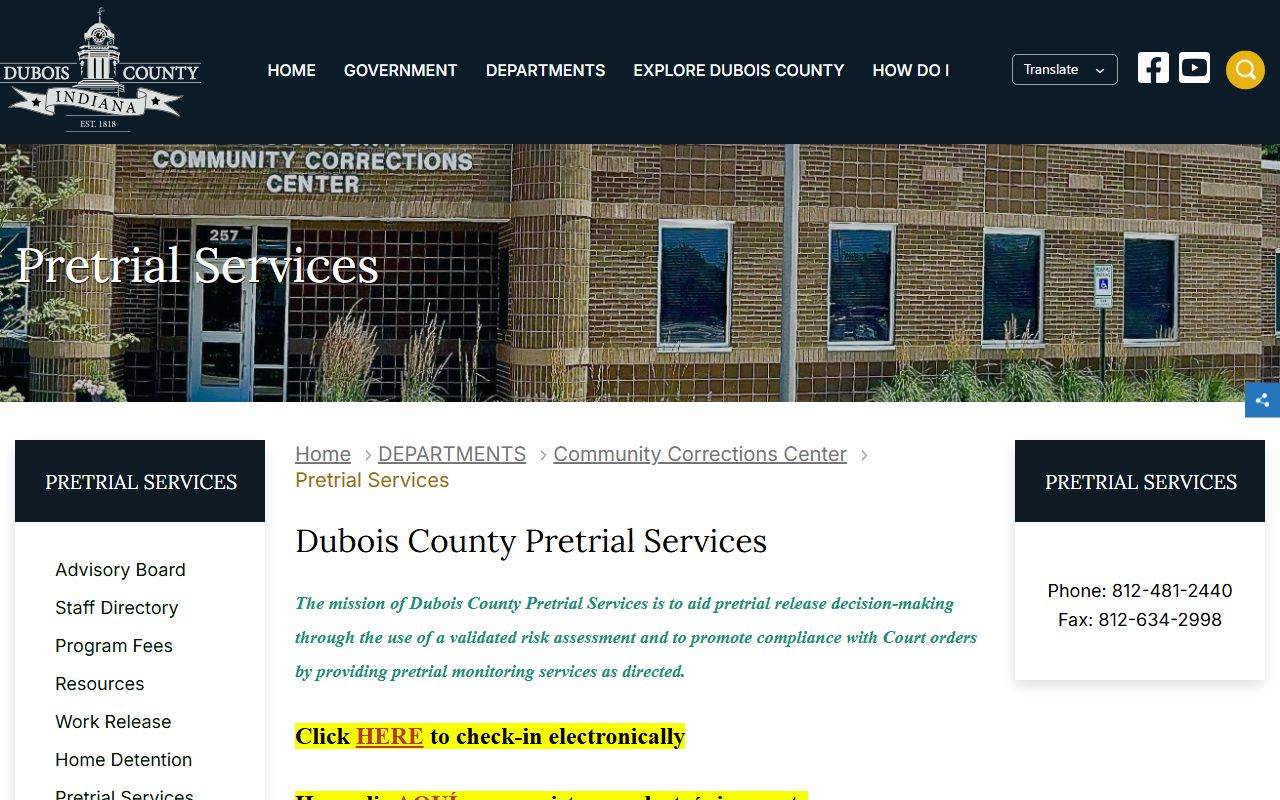
Pretrial entries may appear after formal charges, especially when release or supervision terms are ordered.
Dubois Charge Status Terms
Charge status changes as a court case moves. A new charge may be pending at first. It may be amended, reduced, dismissed, diverted, resolved by plea, resolved by trial, or followed by sentencing. A MyCase result should be read from the most recent docket entries back to the filed charge because older entries may no longer describe the current state of the case.
One arrest can lead to no filed charges, one filed charge, or several charges. Each count can have its own outcome. A theft charge, alcohol charge, drug charge, or public-order charge assigned to Superior Court may not move the same way as a violence, burglary, robbery, or weapons case assigned to Circuit Court. Local rules assign criminal categories between the courts, so the court name is part of the charge-status context.
| Status | What It Means |
|---|---|
| Pending | The charge remains unresolved and should be checked against current hearing and docket entries. |
| Amended / Reduced | The filed accusation changed, often by charge wording, count, or level. |
| Dismissed | The charge was ended by court order or prosecutor action, with later entries needed for details. |
| Diversion | The case may be routed through pretrial diversion terms instead of ordinary conviction sentencing. |
| Convicted | A guilty plea or verdict produced a judgment of guilt. |
| Sentenced | The court imposed penalty terms, costs, probation, jail, or other supervision when public. |
Note: The Clerk FAQ says bond return depends on sentencing and unpaid fees with the Clerk, Probation, or Community Corrections.
Charges vs Convictions
A charge is not a conviction. A charge is the formal accusation in the court record. A conviction is an outcome after a guilty plea, verdict, or judgment. Dubois County arrest records may show a custody event, but a court charge record must still be checked for whether the prosecutor filed charges and how each charge ended.
This is the most common reading error in arrest-to-charge searches. A person may be arrested and released without the same charges appearing later in court. Charges may be dismissed, amended, or reduced. Some matters may involve diversion, and some may end in conviction and sentencing. The docket and disposition fields matter more than the first charge description alone.
| Charge | Conviction | |
|---|---|---|
| Meaning | Formal accusation filed in court after review. | Judgment of guilt by plea or verdict. |
| Proof Level | Accusation based on legal charging standards. | Case outcome after plea, trial, or judgment. |
| Where It Appears | Charge list, information, docket, or complaint entries. | Disposition, judgment, sentence, and post-judgment entries. |
| How to Read | Check whether it is pending, amended, reduced, or dismissed. | Check sentence, probation, fines, costs, and expungement status. |
Dubois Charge Codes and Levels
Indiana court records use case numbers and case-type codes governed by Administrative Rule 8. Charge records may also point to Indiana criminal law in Title 35. The research identifies criminal categories assigned between Dubois Circuit Court and Dubois Superior Court, including violence, weapons, burglary, robbery, sex crimes, drug cases, alcohol cases, theft, stalking, and conservation violations. The court assignment and charge text should be read together.
Charge levels affect case handling and possible sentencing, but the page should not infer a level that the court record does not show. Use the filed charge, statute, court, status, disposition, and sentence entries shown in MyCase or the Clerk record. If a charge was reduced or amended, the final disposition may relate to a different count or level than the original arrest description.
The Community Corrections evidence-based programming page documents treatment and supervision resources that may appear in post-charge court outcomes.
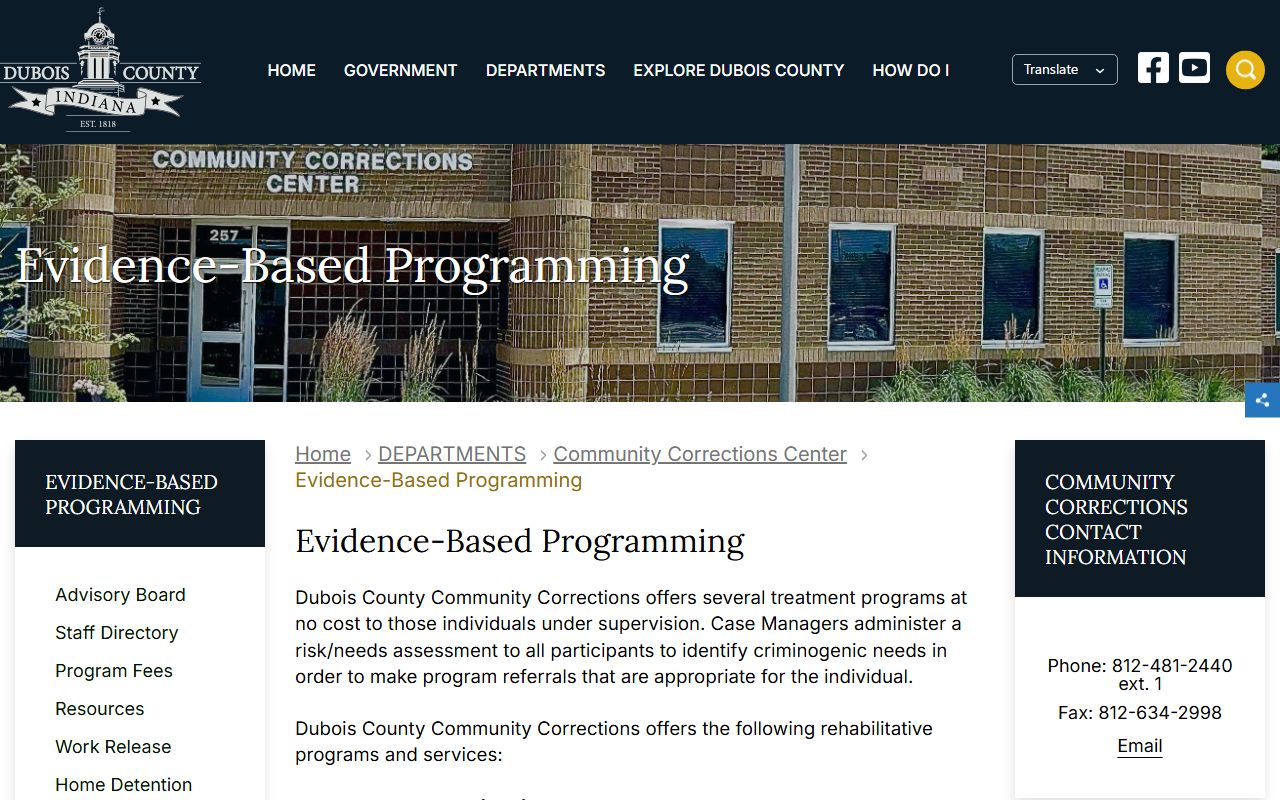
Programming and supervision terms can be part of the court record after charges lead to pretrial or sentencing orders.
Access Limits for Dubois Arrest Records
Public access is split between sheriff records and court records. The sheriff side may involve current inmate viewing, report requests, accident reports, or custody confirmation. The court side uses MyCase, the Clerk, and Indiana court-access rules. The Clerk paperwork page lists a Public Record Request Form, while the sheriff police-report page documents law-enforcement report channels.
Indiana public records are generally accessible unless a statute or rule makes them confidential or discretionary. Court records also follow Indiana Administrative Rule 9 and Access to Court Records Rule 9. MyCase may show non-confidential case information and some public documents, but not every document is online. Older records, certified copies, and restricted records route to the Clerk or court process.
The Community Corrections program fees page documents local home detention, monitoring, transfer, and supervision fees that can matter after charges are filed.
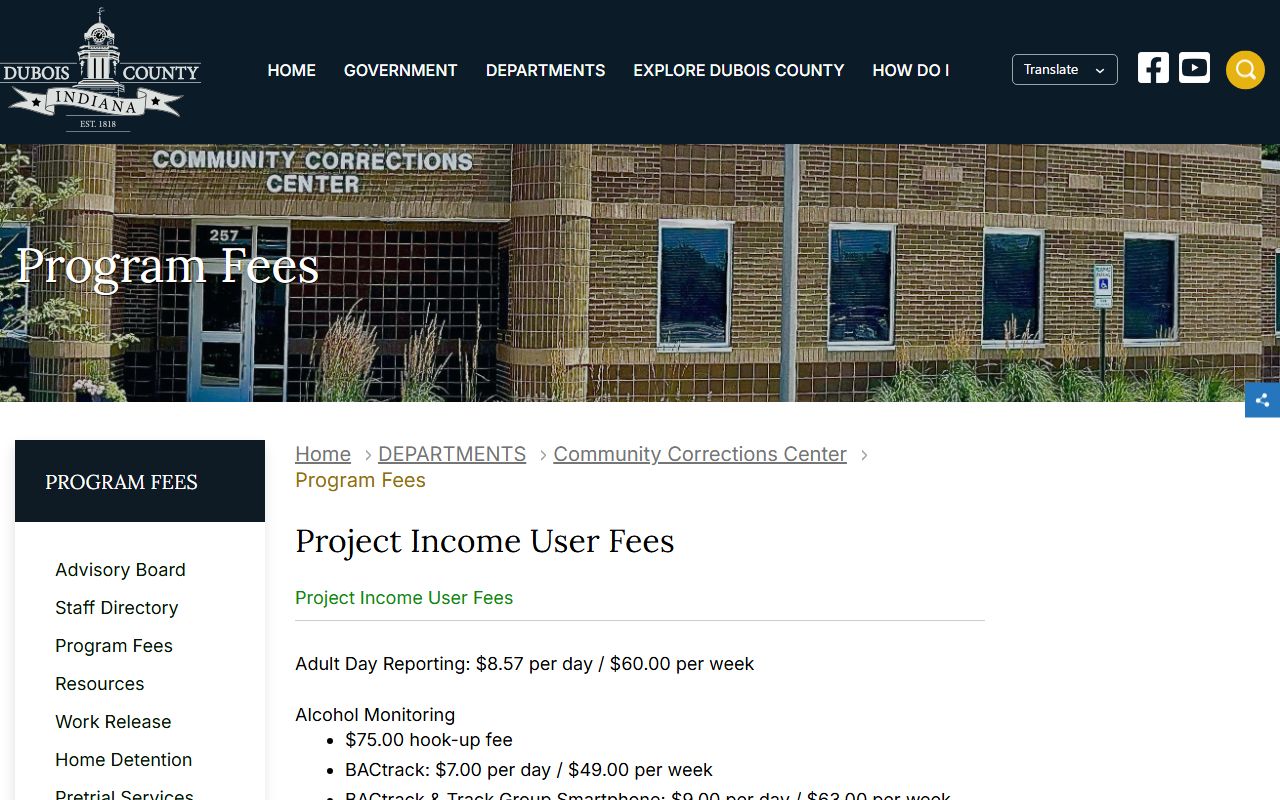
Fee entries can appear in the court record when supervision, diversion, or community corrections terms are ordered.
Sealed Arrest and Charge Records
Some Dubois County arrest records and charge records are not public. Juvenile matters are restricted and are not ordinary adult criminal records. Adoption, mental-health, sealed, expunged, and protected personal-identifier records also require care. MyCase official guidance states that date of birth can help narrow a search but is excluded from public case details.
Indiana expungement law is found in IC 35-38-9. A person seeking expungement normally files a petition in the court connected to the arrest, charge, or conviction. Non-conviction records follow a different path from conviction records. For convictions, eligibility depends on the offense, time, sentence completion, financial obligations, and statutory exclusions. Expungement often limits public access rather than destroying every record.
| Sealed | Expunged | |
|---|---|---|
| Public Visibility | Hidden or limited by rule, statute, or court order. | Public access limited or record marked under Indiana law. |
| Record Type | May apply to juvenile, confidential, or ordered-sealed records. | May apply to eligible arrests, charges, juvenile allegations, or convictions. |
| Access Route | Court order or rule-based access process. | Petition in the court tied to the arrest, charge, or conviction. |
Indiana Title 31 contains juvenile and adoption provisions that can restrict arrest-linked and charge-linked records involving minors.
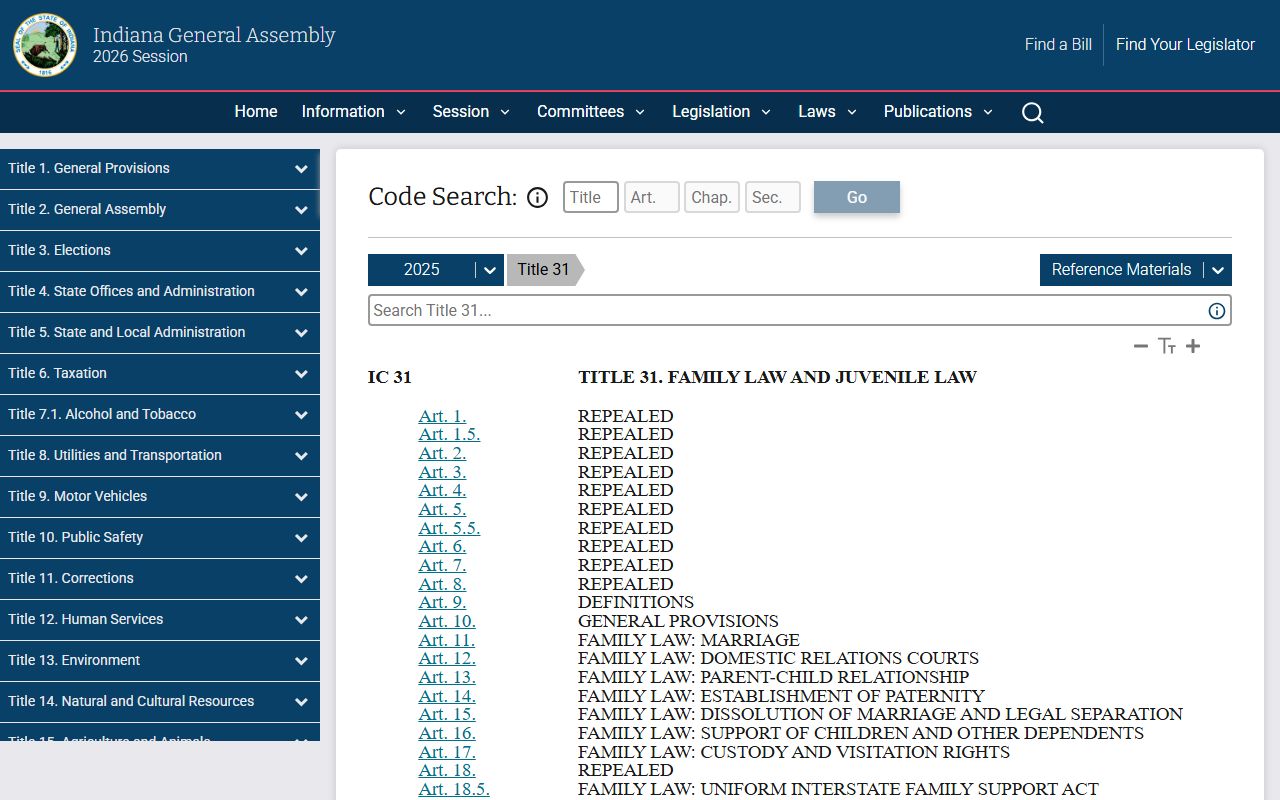
Minor-related records should never be treated as ordinary public adult arrest or charge records.
Dubois Arrest Search Cautions
An arrest-to-charge search is useful for personal case tracking, court-date checks, and understanding whether charges followed a custody event. It is not the same as a regulated background check. Arrest data can be incomplete, court charges can be amended or dismissed, and convictions require a separate disposition reading. Indiana expungement and sealing can also change what is visible to the public.
For official proof, request court copies from the Clerk of the Courts or the relevant law-enforcement record from the Sheriff's Office. For current custody, use the sheriff roster, sheriff app, Security Center phone line, Indiana DOC for state prisoners, or Indiana SAVIN for custody notifications. For court charges, use MyCase and the Clerk.
Important: Public arrest and charge lookups should not be used as consumer reports for FCRA-regulated decisions.
Public Record Search
Sponsored Results